
Last updated November 23, 2026
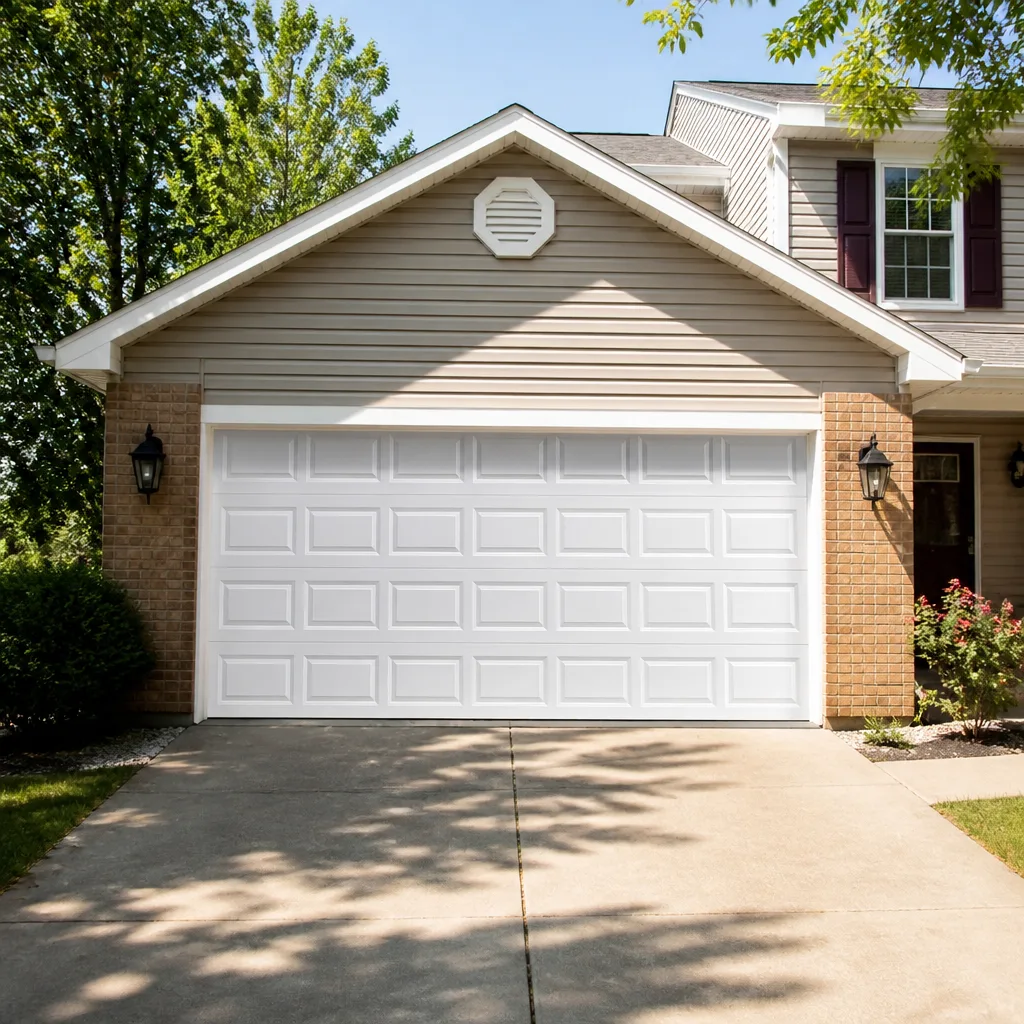 Raised-panel steel
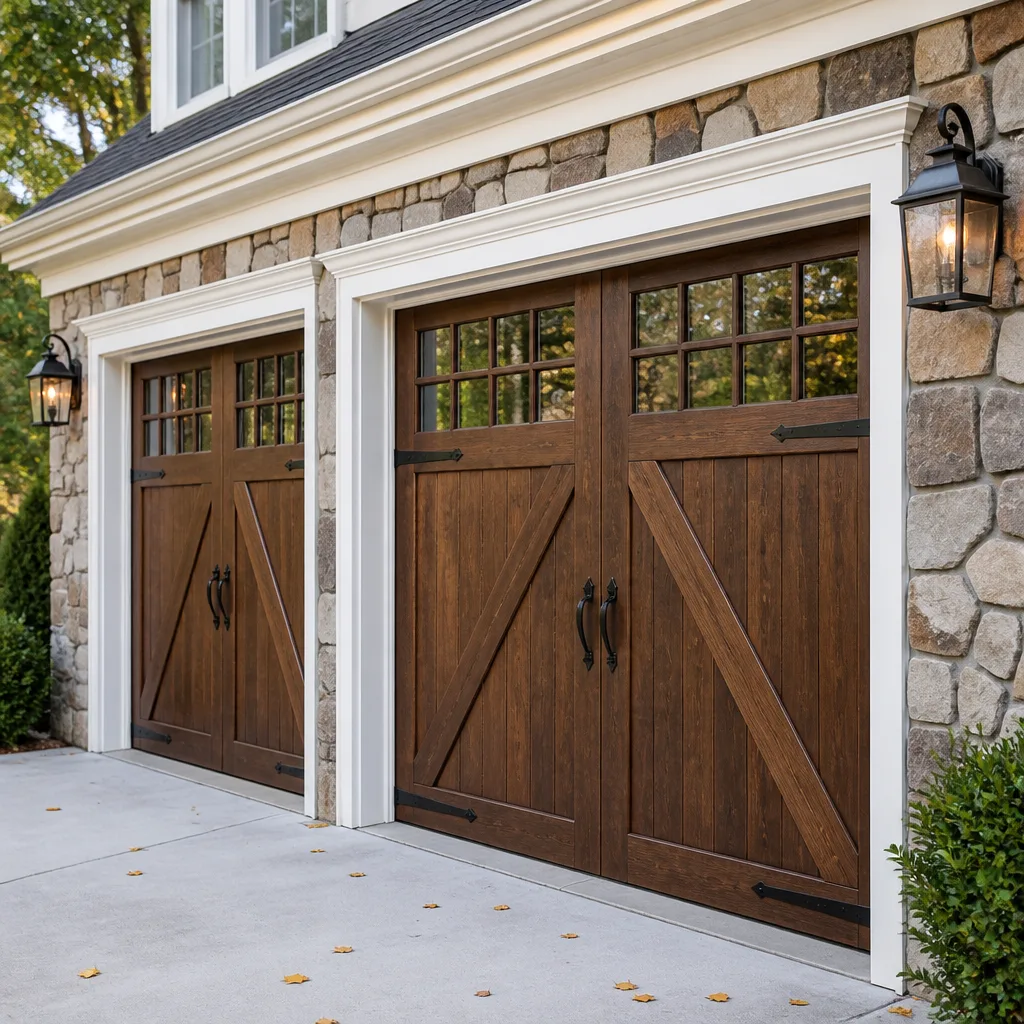 Carriage house
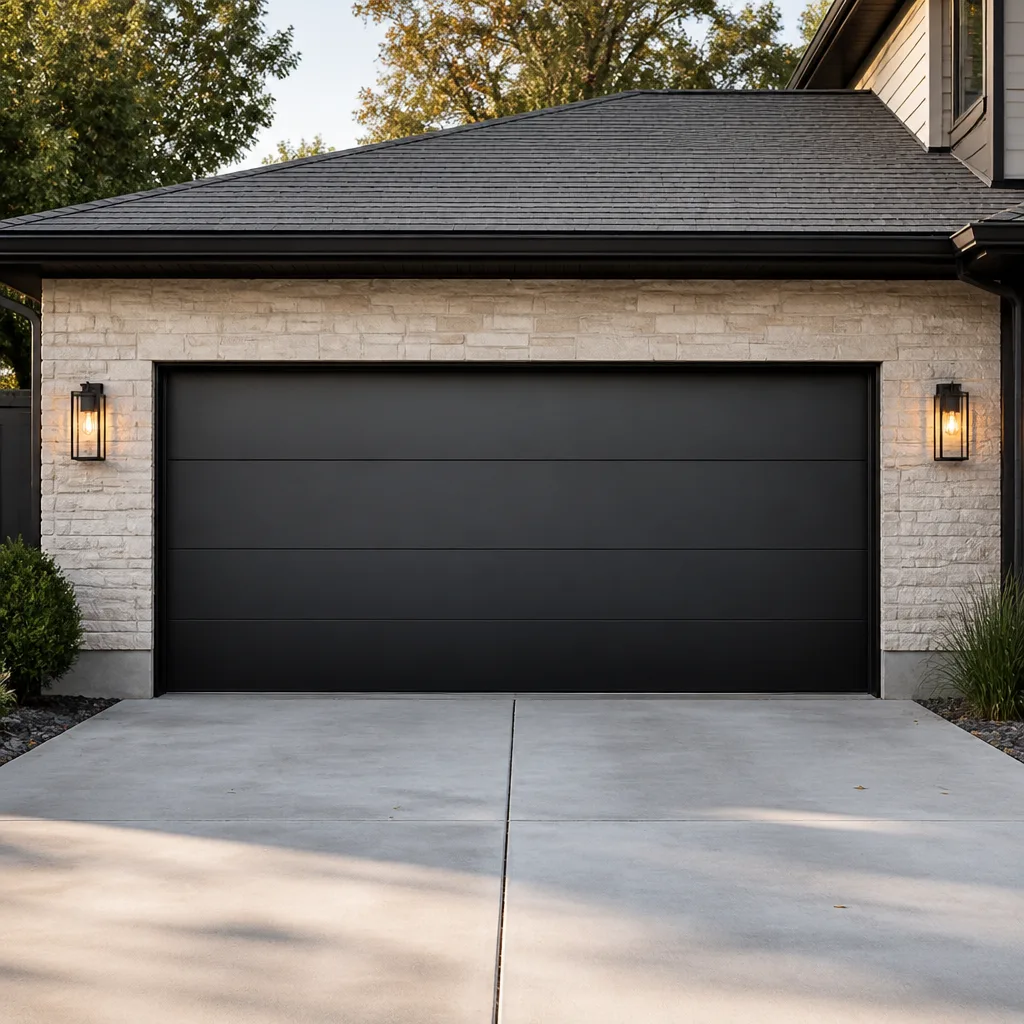 Modern flush
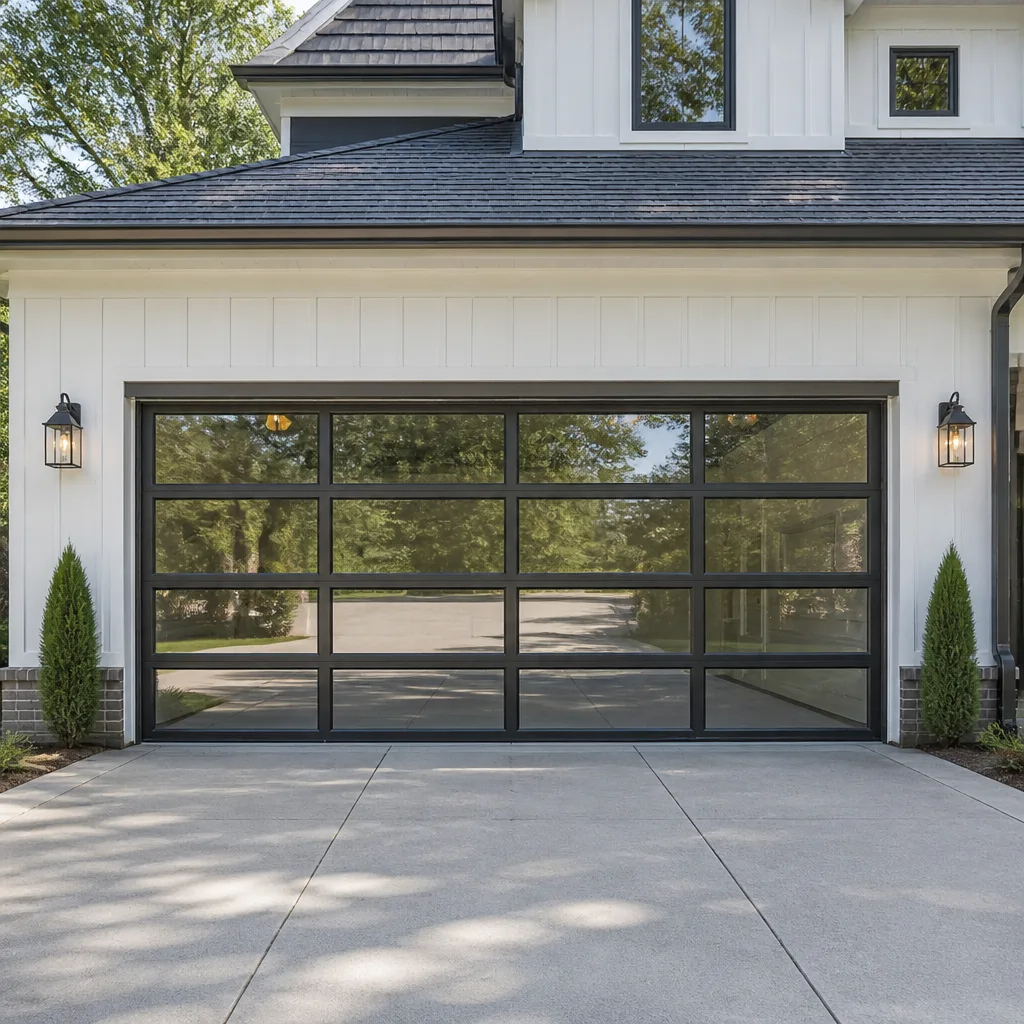 Full-view glass
 LiftMaster openers
 Chamberlain openers
Full 25-point door and opener safety check with every visit - springs, cables, rollers, tracks, and your LiftMaster or Chamberlain opener included
You get a price before we start. It does not change when the pro arrives.
Get your free estimateGarage Door Permits, Codes & Inspections in Everett, WA: What You Need to Know
Replacing a garage door with the same size and weight in the same opening typically doesn’t require a permit in Everett. Widen the opening by even a few inches, change the structural header, or add an automatic opener to a previously manual door in certain configurations, and the calculus changes. Most homeowners assume the answer is either “always” or “never,” and both assumptions get people into trouble – one wastes money on a permit they didn’t need, the other skips one they did. This guide maps the line between repair and alteration under City of Everett and Snohomish County rules, walks through what an inspection actually covers, and explains why unpermitted garage door work becomes a real problem at resale. If you’re planning a garage door project in Everett, this is the reference to keep open.
Quick Answer
In Everett, a like-for-like garage door replacement (same size, same weight, same opening, no structural changes) generally does not require a building permit, while any project that alters the opening size, changes the structural header or framing, or converts a manual door to an automatic opener in certain configurations does. Wind-load and safety hardware requirements apply to replacements near Puget Sound, and permitted installations are inspected for anchoring, track alignment, balance and safety features. When in doubt, call the City of Everett building department before you order the door – the answer takes minutes and saves months.
Styles & brands we work with
- Raised-panel steel
- Carriage house
- Modern flush
- Full-view glass
- LiftMaster openers
- Chamberlain openers
Table of Contents
- What Triggers a Garage Door Permit in Everett?
- Repair vs. Alteration: Where the Line Actually Sits
- Wind-Load Ratings and Puget Sound Door Replacements
- What a Garage Door Inspection Actually Covers
- Resale and Insurance: Why Unpermitted Work Follows You
- How to Check Permit Status on Work a Previous Owner Did
- A Step-by-Step Permit Process for Everett Homeowners
- When to Call a Professional
What Triggers a Garage Door Permit in Everett?
A garage door permit in Everett is triggered by structural change, not by the act of swapping a door. That’s the simplest way to hold the rule in your head. The City of Everett and Snohomish County both treat a garage door replacement as a minor alteration when the opening stays the same, and as a structural project when the opening changes. The distinction matters because structural projects pull in framing, header and load-path review, and that’s where permits and inspections enter the picture.
The work most likely to require a permit includes:
- Widening or heightening the opening. Even a few inches changes the header span and the load the wall above the opening carries. That’s a structural change, and it’s permitted.
- Replacing or modifying the structural header above the garage opening. A new header is a structural element and belongs on a permit.
- Changing the door type in a way that affects anchoring or load. A heavier door, a different track configuration, or high-lift tracks that move the door closer to the ceiling can all require structural review.
- Converting an attached garage to living space or changing how the garage connects to the house. This is a bigger project, but the garage door opening is part of it.
- Adding an automatic opener to a previously manual door in certain configurations, particularly where the installation requires new electrical work or changes to the door’s balance and safety setup. Electrical work in a garage is a frequent trigger.
What usually does not require a permit: a like-for-like replacement, spring repair, opener repair, panel replacement on a sectional door, and track realignment when no structural component moves. For those, the work is a repair, and repairs don’t pull permits. If your project lands in the “no permit” column, our garage door repair service covers it.
The threshold isn’t identical in every city, which is why we recommend confirming with the City of Everett building department directly before you order materials. The answer is free, and it’s specific to your address.
Repair vs. Alteration: Where the Line Actually Sits
The repair-versus-alteration line is the single most misunderstood part of garage door permitting in Everett. Most homeowners think of it as a question of cost or effort – a big job is an alteration, a small job is a repair. That’s not how the building department sees it. The question is whether the work changes the structure of the opening, the load path, or the electrical system. If it doesn’t, it’s a repair, regardless of how many hours it takes.
Here’s how the classification usually breaks down:
- Repair, no permit. Replacing a snapped torsion spring or extension spring. Replacing opener gears, a drive belt, a logic board, or a remote. Swapping a dented bottom panel for a matching panel of the same weight. Realigning a bent track. Replacing rollers and hinges. Adjusting travel limits and force settings on an opener.
- Alteration, likely permit. Enlarging the opening. Replacing the structural header. Converting a manual door to an automatic opener where new electrical circuits are added or the door’s anchoring changes. Changing from a standard-lift to a high-lift track configuration that moves the door and its springs into a different part of the garage.
- Full replacement, permit depends on scope. A same-size, same-weight replacement in the same opening is generally treated as a minor alteration and often doesn’t require a permit. A replacement that changes size, weight class, wind-load rating, or anchoring does.
In our experience, the projects that surprise homeowners are the “small” ones that cross into structural territory. Widening an opening by six inches to fit a newer door looks like a swap on paper. In the wall, it’s a new header. That’s the kind of change that needs a permit, and it’s the kind of change that gets flagged at resale if it wasn’t pulled.
If you’re weighing repair against replacement, this is also the point where an honest assessment matters. A door that’s structurally sound and only needs springs and rollers is a repair. A door with a failed header, sagging tracks and a spent opener is closer to an alteration, and the permit question follows. When our technicians look at a door, they’re checking both the garage door spring repair side and the opener side, because the permit category can hinge on which side of the system is actually failing.
Wind-Load Ratings and Puget Sound Door Replacements
Wind-load ratings are a real factor in Puget Sound garage door replacements, and they’re one of the most overlooked pieces of the permit conversation. Doors installed in this region need to be rated for the wind pressures the local code assigns to the site, and the rating is part of what a permitted installation is checked against. A door that’s structurally fine for a calm inland site may not carry the right rating for an exposed one.
What that means for a replacement in Everett:
- The door carries a wind-load rating, and the rating needs to meet or exceed what the code requires for the location. That’s part of the door specification, not an afterthought.
- Anchoring hardware matters as much as the door rating. A rated door installed with light-duty anchors doesn’t perform like a rated door. The hardware, the track, and the way the door attaches to the framing all participate in the wind-load path.
- Code-compliant hardware upgrades are sometimes required when a replacement raises the rating or changes the door’s weight class. That can mean heavier hinges, reinforced struts, or a different track system.
- Manufacturers publish the ratings for their door lines. Clopay and Amarr both publish wind-load information for their product families, and the specification sheet for the door you’re buying should state the rating clearly.
In our experience, this is where a generalist handyman runs into trouble. A door “the same size as the old one” is not automatically the same rated door. Weight class, construction and hardware all shift the wind-load picture. When we install a door in Everett, we’re matching the rating to the site, and the written estimate states which door and which rating you’re getting before anything is ordered.
A note on hail: hail is uncommon here, so the weather-related concerns that matter for a garage door in Everett are wind exposure, moisture and the occasional fallen limb – not hail impact. Wind-load rating is the code question that comes up most often in replacement projects, and it’s worth asking about specifically when you get a quote.
What a Garage Door Inspection Actually Covers
A permitted garage door installation in Everett is inspected for the same core items regardless of the door brand: anchoring, structural attachment, track alignment, balance, and safety features. The inspector isn’t checking whether the door is pretty. The inspector is checking whether the door is attached correctly, whether it operates safely, and whether the installation matches what was permitted.
What typically gets looked at during inspection:
- Structural attachment and anchoring. How the tracks, the springs and the header brackets attach to the framing, and whether the anchors match the door’s weight and wind-load requirement.
- Opening size and header condition. Whether the opening matches the permit and whether the header is sound and correctly sized for the load above it.
- Track alignment and plumb. Whether the vertical and horizontal tracks are aligned, level and securely fastened.
- Balance and operation. Whether the door is properly balanced on its springs, opens and closes smoothly, and stays in position when stopped halfway.
- Safety features. Whether the opener has functioning safety reversal and photo-eye protection, and whether the door’s pinch-resistant design or other safety hardware is in place.
- Electrical connection for the opener. Whether the opener’s electrical work meets code and was installed as part of the permitted scope.
- Fire separation where applicable. For an attached garage, whether the door and its assembly maintain the separation the code calls for between the garage and the living space.
What commonly gets flagged: undersized anchors, tracks fastened with the wrong hardware, a door that isn’t balanced on its springs, a photo-eye mounted too high or misaligned, and an opener installed on a door that’s too heavy for it. None of these are exotic failures. They’re installation shortcuts, and they’re exactly what a permitted inspection is designed to catch.
If the inspection turns up a balance problem or a hardware issue, that’s usually an easy correction before final sign-off. What you want to avoid is learning about it after the contractor has been paid and the project is closed out. This is one of the reasons we hand over the written estimate and the door specification together: the inspection is checking against the same document you approved.
Resale and Insurance: Why Unpermitted Work Follows You
Unpermitted garage door work discovered during a home inspection can complicate a sale and can affect how a buyer’s insurer views the property. That’s the part most homeowners don’t hear until it matters. A garage door is a structural opening on a house, and a buyer’s inspector looks at structural openings closely. An opening that’s been widened without a permit shows up as a discrepancy between the current house and the permit history on file with the city. That discrepancy becomes a negotiation item.
How this typically plays out:
- The buyer’s inspector notes the change. A wider opening, a new header, or an added opener circuit that doesn’t match the permit record gets flagged in the inspection report.
- The buyer asks for documentation. If there’s no permit on file, the seller has to either produce one retroactively or absorb the cost of the buyer’s uncertainty – usually in the form of a price reduction or a repair credit.
- Insurance can ask questions too. A homeowner’s policy covers the structure of the home, and an insurance carrier reviewing a claim on a garage door may ask whether the installation was permitted and inspected. Unpermitted structural work is the kind of detail that creates coverage questions at the worst possible time.
- The problem doesn’t age out. Permit records live with the property, not with the owner who did the work. A change made a decade ago without a permit is still a change without a permit when you sell.
In our experience, the cost of pulling the permit is small against the cost of unwinding an unpermitted alteration during a sale. If you’re planning a garage door project in Everett that touches the opening or the header, permit it. If you’re buying a home with a garage door change in its history, ask for the permit record before you close.
How to Check Permit Status on Work a Previous Owner Did
You can check the permit status on garage door work a previous owner did by requesting the permit history for the property from the City of Everett building department. The record is public and tied to the address, not to the person who pulled it. That’s the good news. The permit history follows the property, so the paper trail is available to you regardless of who did the work or when.
The process, in order:
- Start with the city’s building department. Request the permit history for your address. Ask specifically for any permits related to the garage, the garage door opening, electrical work in the garage, and any structural changes to the front wall of the house.
- Compare the permit record to what’s actually there. If the record shows a like-for-like replacement and the opening on the house is wider than the original, you’ve found a discrepancy. If the record shows a permitted installation with a final inspection, you’ve found a clean project.
- Check the final inspection sign-off. A permit that was pulled but never finaled is a yellow flag. The work may be fine, but the paper trail isn’t closed, and that follows the property too.
- Ask the seller for documentation. Contractor invoices, the door specification sheet, and the inspection sign-off are all reasonable to request during a home purchase. A seller who did permitted work usually has the paperwork.
- Get an independent look at the door. If the record is unclear or the door looks like it’s been altered, have a garage door specialist examine the opening, the header, the anchoring and the opener before you close. A visual inspection won’t tell you everything, but it will tell you whether the door is safely installed.
In Everett, this check is worth doing before you buy, not after. It’s also worth doing before you sell, so you know what a buyer’s inspector is going to find. If a previous owner installed a Wayne Dalton or Genie system without paperwork, the door itself may be fine – the issue is the record, and the record is what a buyer’s lender and insurer look at.
A Step-by-Step Permit Process for Everett Homeowners
The permit process for a garage door project in Everett follows a predictable path: confirm whether a permit is needed, submit the application with your plans, get the permit, do the work, then pass the inspection. The order matters. Doing the work first and asking about the permit second is the expensive version of the same project.
- Define the scope in writing. Same size and weight in the same opening, or a change to the opening or the structural header? The scope determines whether you need a permit.
- Call the City of Everett building department. Confirm the permit requirement for your specific address and scope. Ask what documents they want with the application – typically a door specification sheet, a site plan, and a description of the structural work if there is any.
- Get the door and hardware specification in hand. The wind-load rating, the door weight, and the anchoring hardware all belong in the application. This is where a specific door line matters: Clopay and Amarr publish the specs you’ll need, and having them ready speeds up review.
- Submit the permit application. Pay the fee, get the permit number, and post the permit as the city requires during the work.
- Schedule the installation. The door and hardware are ordered to the specification that was permitted. Any change to the door or the opening after the permit is issued needs to go back through the city.
- Call for inspection when the work is done. The inspector checks anchoring, header, tracks, balance and safety features, and signs off if the installation matches the permit.
- Keep the final inspection record with your home documents. This is the document that answers the question at resale, and it’s the one a buyer’s inspector will ask for.
In our experience, the projects that run smoothest are the ones where the door specification is settled before the permit application goes in. That’s one reason we work across multiple brands rather than a single manufacturer’s line – if the door you want doesn’t carry the rating your site needs, we can point you to one that does without sending you back to the drawing board. If your opener is part of the project, the garage door opener repair side of the system needs to be accounted for in the same scope.
Common Mistakes to Avoid
- Assuming “same size” means “same door.” A new door of the same dimensions can carry a different weight class and a different wind-load rating. The permit question depends on the specification, not the tape measure.
- Widening the opening as a “small adjustment.” Six inches wider is a new header and a structural change. In Everett, that’s a permit, and an inspector will see it at resale whether or not it was pulled.
- Skipping the permit because the contractor said it wasn’t needed. Ask the city yourself. The building department is the authority, and the answer is free. A contractor’s verbal assurance isn’t a permit record.
- Adding an opener without thinking about the electrical scope. A manual door converted to an automatic opener can pull in new electrical work, and that work is part of the permitted scope in many cases.
- Pulling the permit but never finaling the inspection. An open permit is a flag in the property record. Close the loop with the final inspection before the project is done.
- Buying a house without checking the garage permit history. The permit record follows the property. A discrepancy between the record and the house becomes a negotiation item, and it’s cheaper to find it before you close.
- Letting a generalist handle a structural change. Garage door openings are a specific structural detail. A handyman who “also does garage doors” is the wrong person to trust with a header or a rated installation.
See the difference
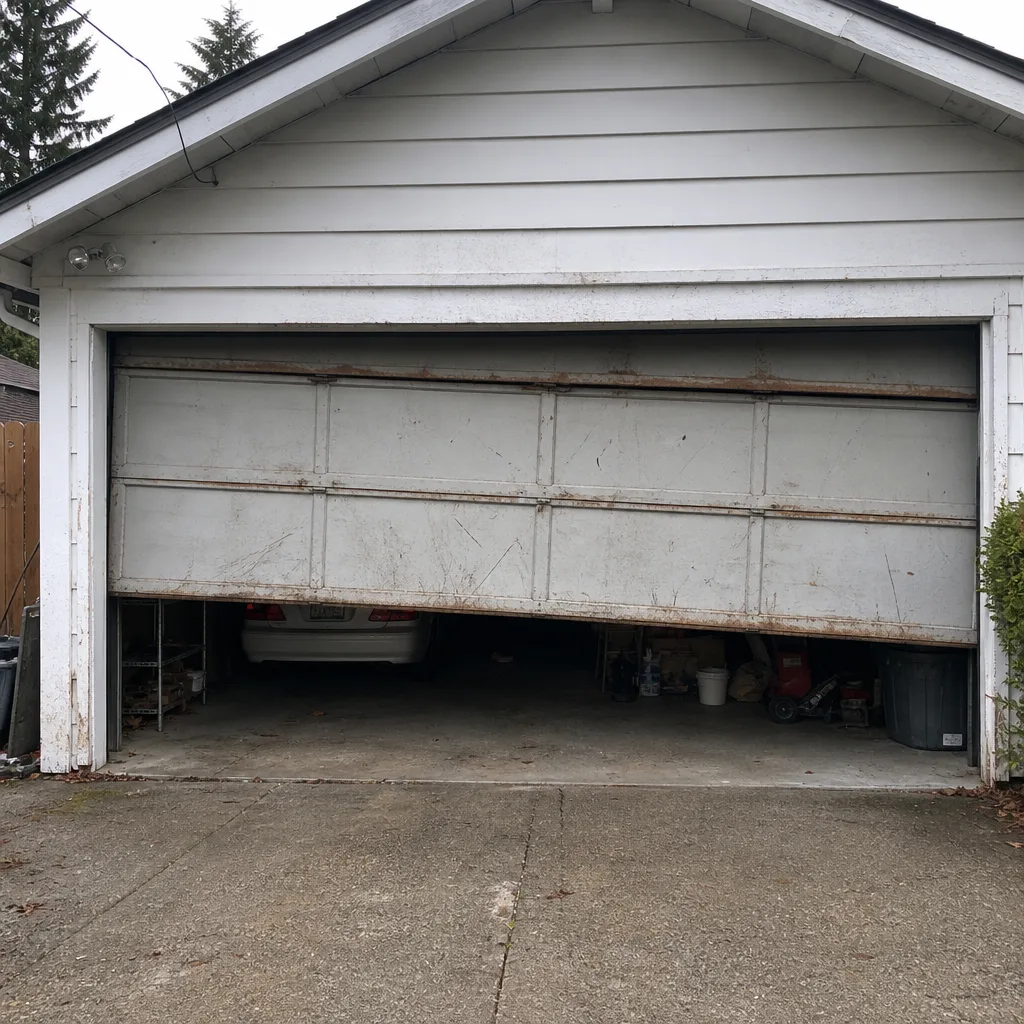 Before
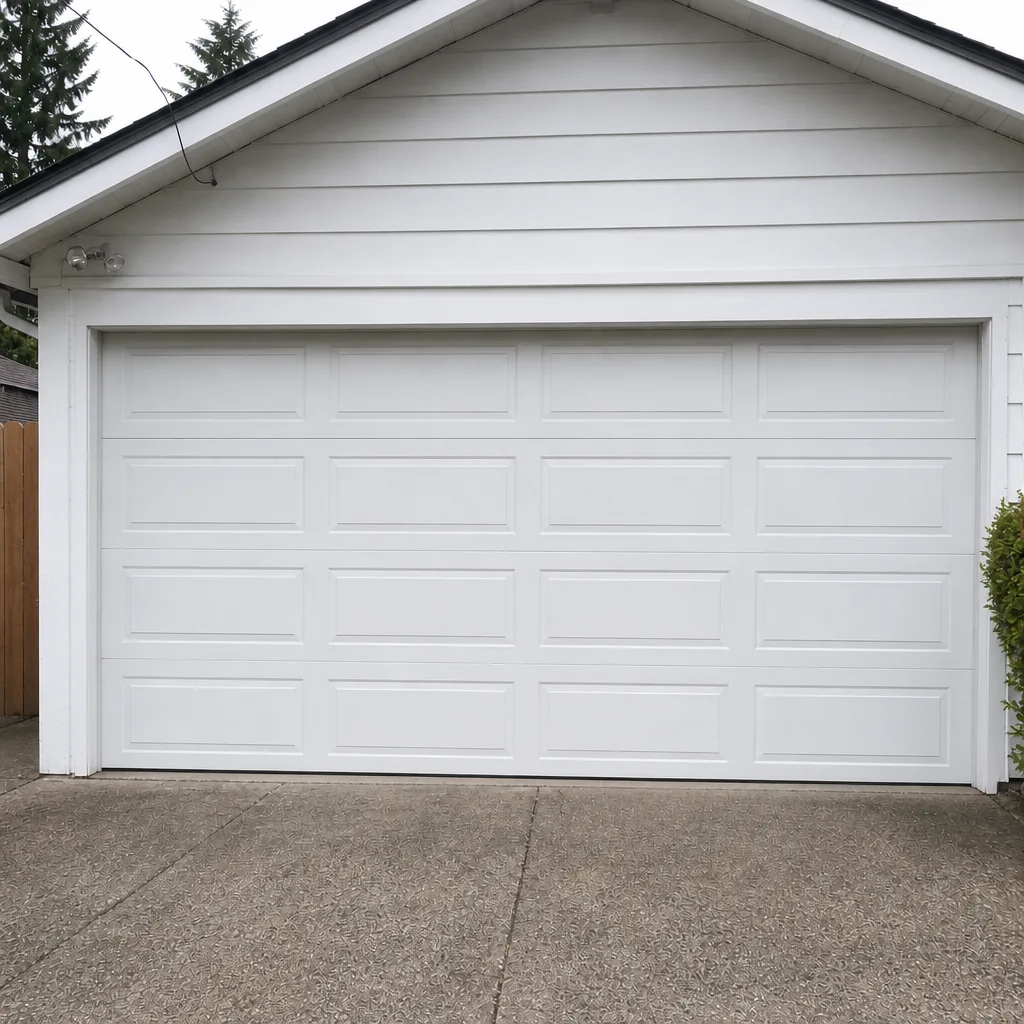 After
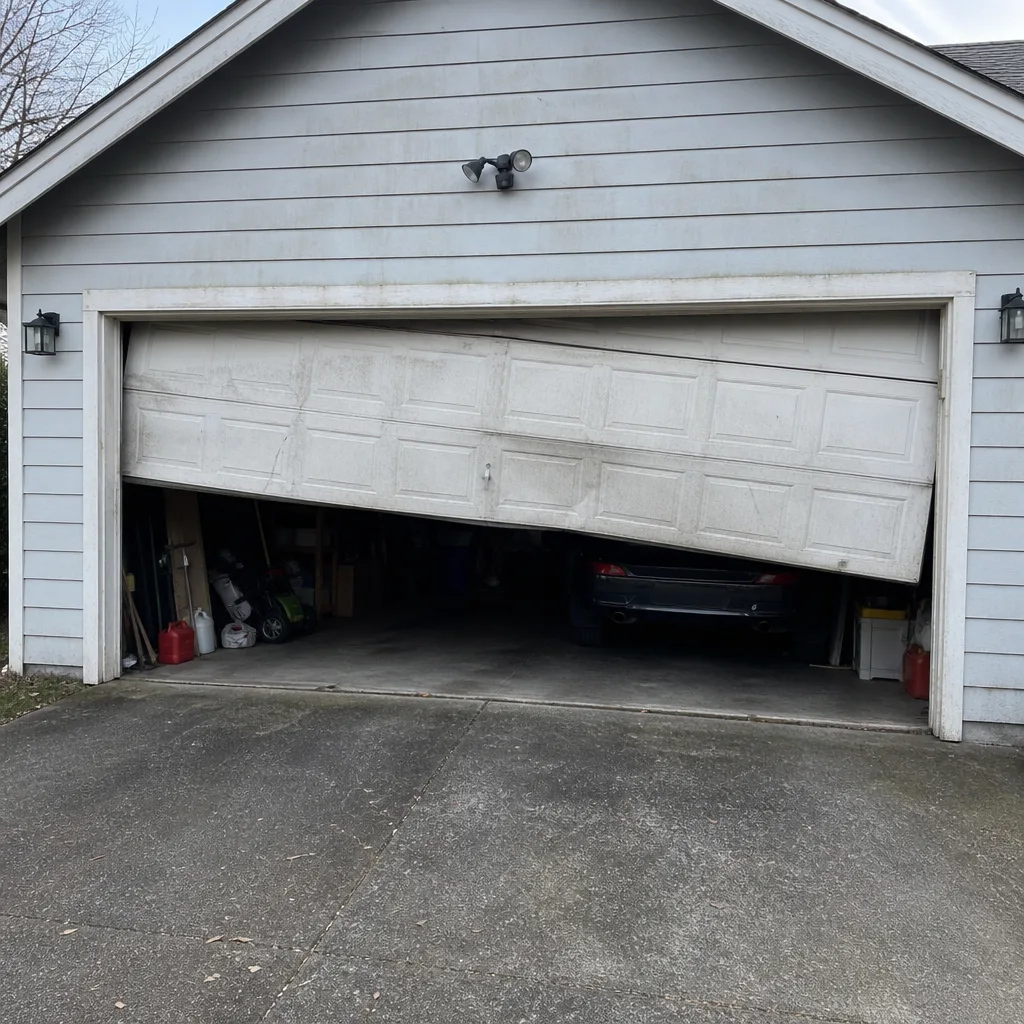 Before
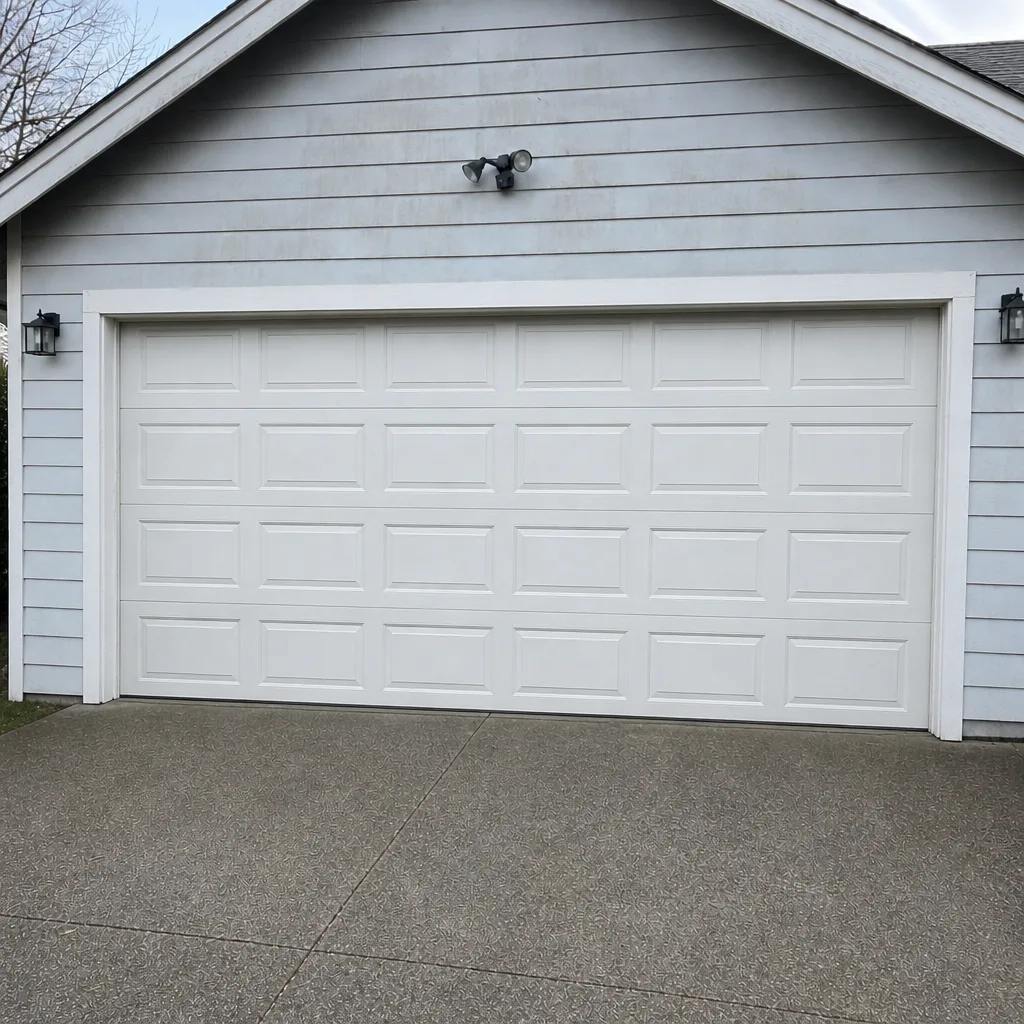 After
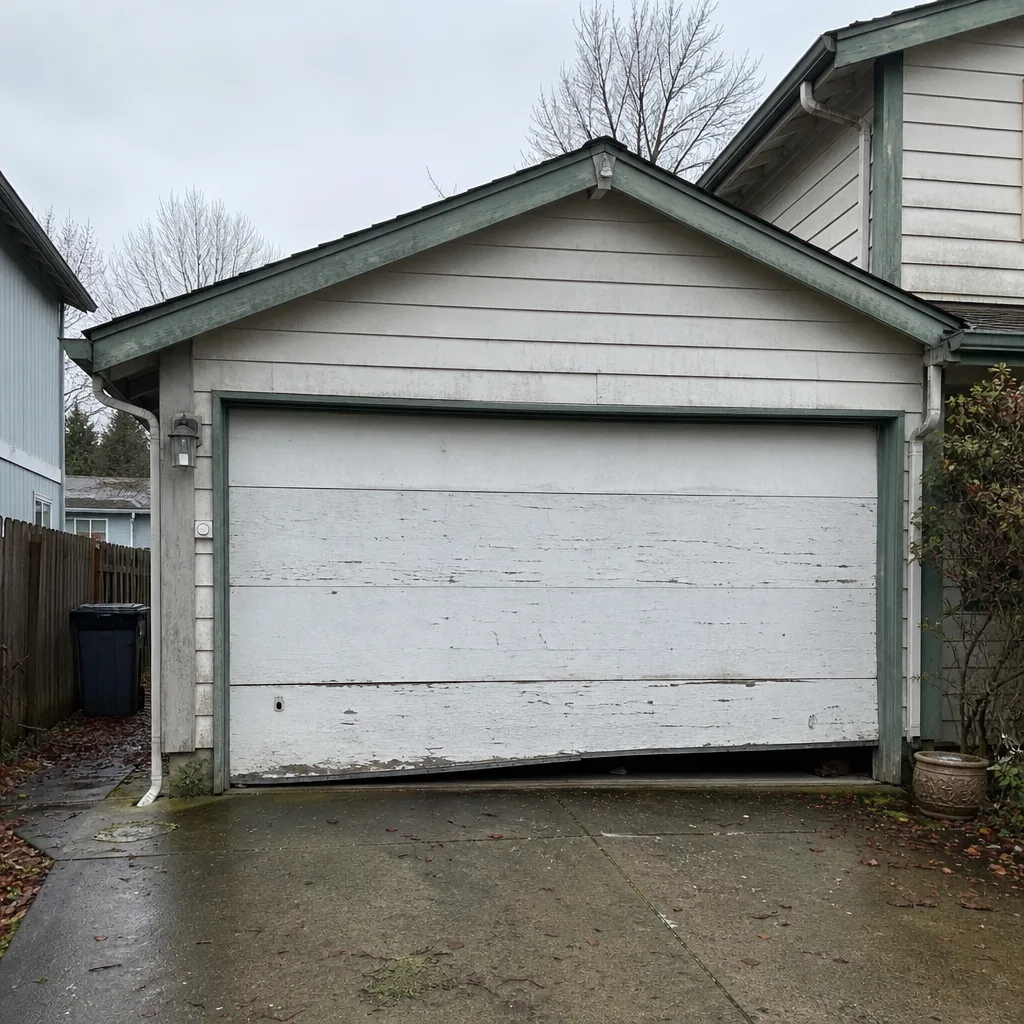 Before
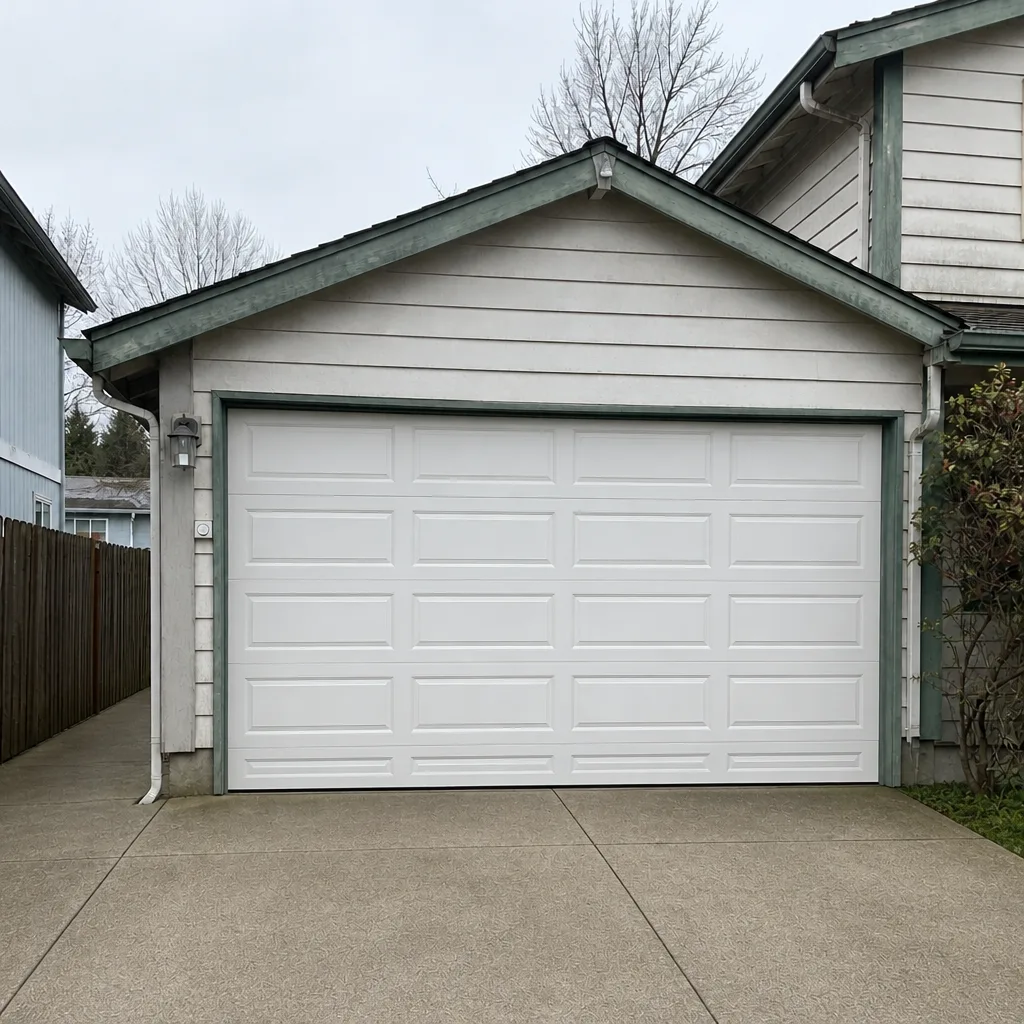 After
When to Call a Professional
Call a professional when the project crosses from repair into structural change, when the door’s wind-load rating needs to be matched to your specific site, or when you’re not sure which side of the line your project falls on. Call immediately if the door won’t move at all – a stuck door is a security opening on your home or a trapped vehicle, and that’s the situation our emergency service exists for. Springs, cables and the hardware that holds a door’s weight under tension are dangerous to work on without training, and we don’t recommend DIY work on them under any circumstances. A trained technician knows how to release that tension safely, and that’s a skill worth paying for. Everett Garage Door Repair Co offers free estimates in Everett – call (833) 991-9736. We answer 24/7. Fast dispatch from 7am to 7pm, Sunday through Friday, closed Saturday. Our technicians have up to 14 years of experience, and the price is quoted and agreed before any work starts.
Frequently Asked Questions
In most cases, no – a like-for-like replacement in the same opening, same size and same weight class generally doesn’t require a permit. You do need one when the project changes the opening size, the structural header, the anchoring, or when an opener conversion pulls in new electrical work. Confirm with the City of Everett building department for your specific address. Call (833) 991-9736 if you want a free estimate on the door itself – estimates are free.
Yes, widening the opening changes the header span and the load the wall above the opening carries, which makes it a structural alteration rather than a minor replacement. In Everett, that’s a permitted project, and the permit is what documents the change at resale. Call (833) 991-9736 to talk through the scope before you order a door – estimates are free.
A permitted installation inspection checks structural attachment and anchoring, opening size and header condition, track alignment, door balance, and safety features like photo-eye protection and safety reversal. Electrical work for the opener is also checked when it’s part of the permitted scope. Call (833) 991-9736 for a free estimate if you want the installation checked before an inspection – estimates are free.
Yes – a buyer’s inspector compares the house to the permit record, and a discrepancy becomes a negotiation item, usually a price reduction or repair credit. An insurer reviewing a claim on the door may also ask whether the installation was permitted and inspected. Call (833) 991-9736 if you’re buying a home with an unclear garage door history – estimates are free.
Request the permit history for the address from the City of Everett building department – the record is public and tied to the property. Compare the permitted scope to what’s actually on the house, and check whether a final inspection was signed off. Call (833) 991-9736 to have the door itself checked before you close – estimates are free.
Sometimes – it depends on the configuration. In many cases the opener installation itself doesn’t require a permit, but if new electrical work is part of the project, or the door’s anchoring and balance change, the scope can require one. Confirm with the City of Everett building department. Call (833) 991-9736 for a free estimate on the opener installation – estimates are free.
The Bottom Line
The line between a garage door repair and a permitted alteration in Everett comes down to structure, not effort. Swapping springs, panels, rollers or an opener is a repair. Changing the opening size, the header, the anchoring or the electrical system is an alteration, and alterations need permits. Wind-load ratings belong in the conversation for any replacement in the Puget Sound region, and the final inspection record is the document that protects you at resale. If you’re not sure which side of the line your project sits on, call the City of Everett building department first, then call us for a free estimate. We fix garage doors. That’s it. That’s everything.
Everett Garage Door Repair Co works on garage doors and openers from Genie, Clopay, Amarr and Wayne Dalton among the eight major brands we handle, and we’ll tell you honestly whether your project is a repair, a replacement or a permitted alteration before anything is ordered. Call (833) 991-9736 for a free estimate. We answer 24/7. Fast dispatch from 7am to 7pm, Sunday through Friday, closed Saturday. Everett Garage Door Repair Co – no guesswork, we know your door.
Written by the team at Everett Garage Door Repair Co.